Rate Of Perceived Exertion Scale (RPE) For Runners
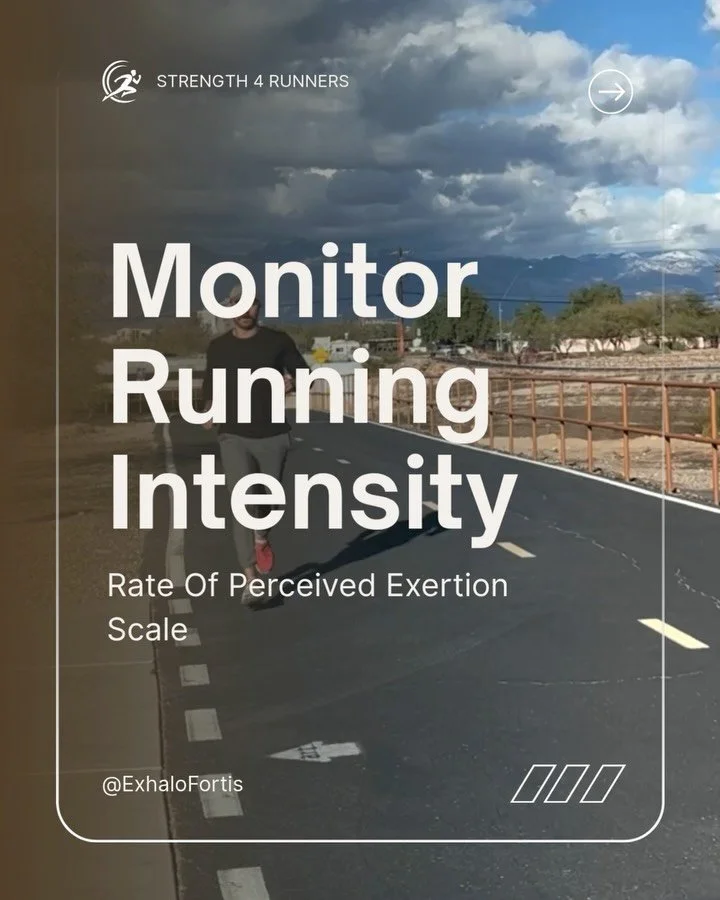
The Rate of Perceived Exertion (RPE) scale is a way to measure how hard you feel you are working during physical activity. It's a subjective measure, meaning it relies on your personal feelings and sensations rather than objective measures like heart rate or speed.
Understanding and using the RPE scale can help you to:
Monitor exercise intensity: Ensure you are working at an appropriate level for your goals
Adjust your workouts: Increase or decrease intensity based on how you feel on a given day.
Prevent overtraining: Recognize when you might be pushing too hard and need to rest.
Communicate with trainers or coaches: Provide valuable feedback about your effort levels.
There are a few different RPE scales, but the most common ones are the Borg Scale (a 6-20 scale) and the modified Borg Scale (a 0-10 scale). We will focus on the more widely used 0-10 scale here.
The 0-10 RPE Scale Explained
Description & Feeling
0: You feel completely at rest. No effort involved.
1-2: You can easily hold a conversation. Breathing is light and comfortable.
3-4: You can talk, but with slight breaks. Breathing is noticeable but not strained.
5-6: You can talk in short sentences. Breathing is deeper and faster.
7-8: Talking is difficult; you can only manage a few words. Breathing is very heavy.
9: You can barely speak. You are gasping for air.
10: Maximum effort. You cannot speak. You are at your absolute limit.
RPE Value
0: Nothing at all
1: Very, very light
2: Very light
3: Light
4: Somewhat moderate
5: Moderate
6: Moderate to somewhat hard
7: Hard
8: Very hard
9: Very, very hard
10: Maximal exertion
How to Use the RPE Scale
To use the RPE scale:
During your activity, pay attention to your body. Consider your breathing rate, how much you are sweating, and how tired your muscles feel.
Choose the number on the 0-10 scale that best represents your overall feeling of exertion at that moment.
Use this number to guide your workout. For example, if your goal is to improve cardiovascular health, you might aim for an RPE of 5-7 during your aerobic exercise.
Important Considerations:
Listen to your body: RPE is a guide, not a strict rule. If you feel pain or excessive fatigue, stop or reduce intensity, regardless of your RPE.
Consistency: Try to be consistent in how you rate your exertion over time. Your perception might change as your fitness improves.
Environmental Factors: Heat, humidity, and altitude can affect your perceived exertion. You might feel like you're working harder in these conditions, even if your physiological output is the same.
Summary: The RPE scale offers a valuable, personalized way to monitor and manage your exercise intensity, helping you achieve your fitness goals safely and effectively.
Download this blog post as a PDF to save it on your phone and reference it before your next run!
For running tips and motivation, follow my Instagram. @ExhaloFortis